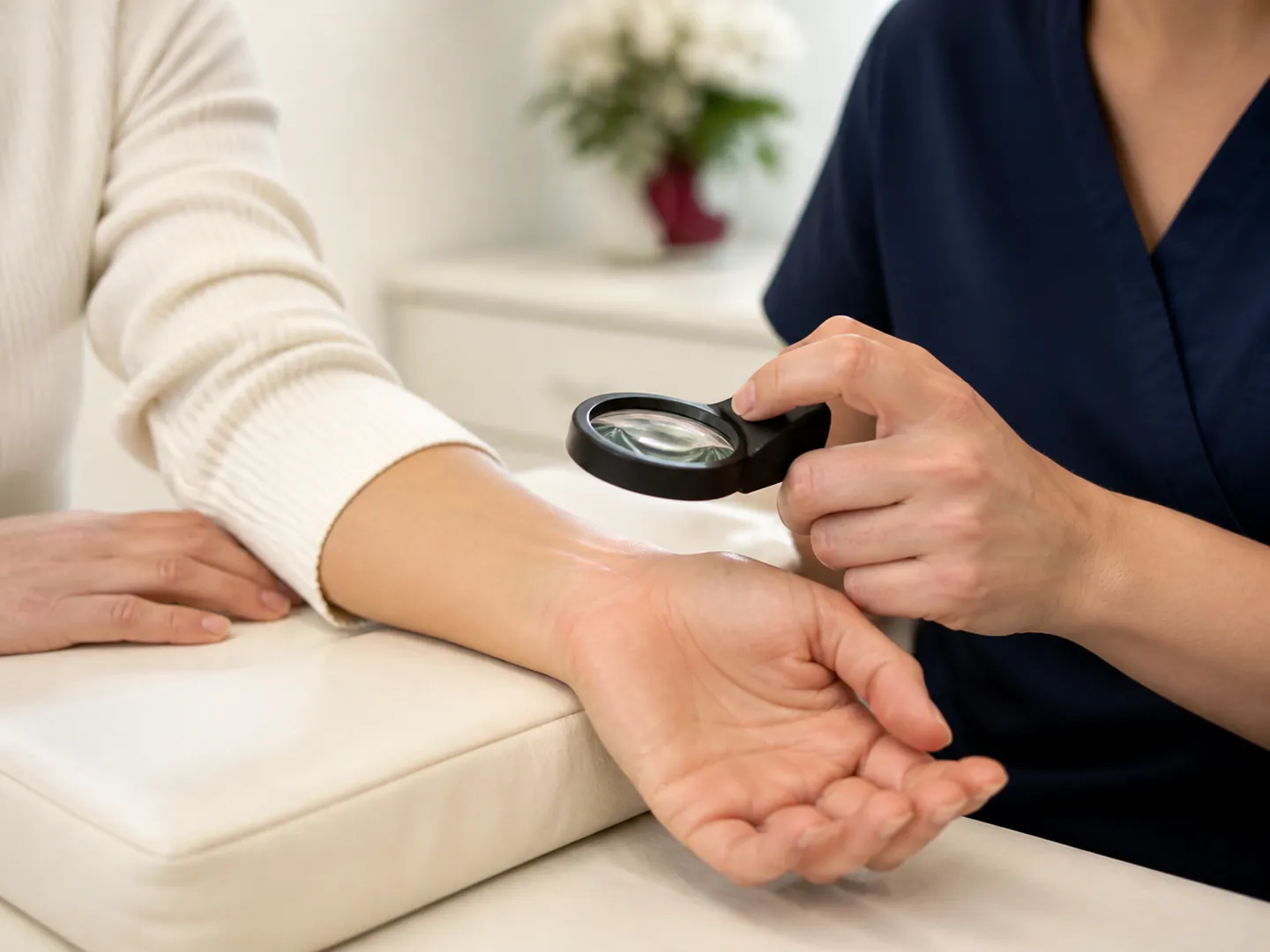
Psoriasis
A structured review of distribution, severity, treatment response and the physical or emotional impact of psoriasis.

Assessment-led support for itchy, dry or inflamed skin, with escalation when symptoms are severe or difficult to control.

Atopic eczema is commonly managed in primary care. A useful consultation clarifies the pattern, triggers, skin-barrier routine and treatment use while recognising infection, uncertainty or disease that needs specialist input.
Care pathway: Usually managed in primary care. Refer or seek specialist advice when severe, refractory, diagnostically uncertain or complicated by significant infection or wider impact.
We map when the concern began, how it has changed, associated symptoms, triggers and treatments already tried.
The presentation, distribution and relevant health factors are reviewed, including whether the diagnosis remains uncertain.
You leave with a clear primary-care plan, safety-net advice or onward referral when specialist assessment is more appropriate.
The consultation fee is confirmed when you arrange your appointment, before you commit. If the pharmacist recommends treatment or onward care, any costs are explained before you decide.
The fee for an eczema consultation is confirmed when you arrange your appointment at Pharmacillin, before you commit. Pharmacillin publishes prices for its aesthetic and hair services on each treatment page and at pharmacillin.com/prices.
Allow about 30 min for an eczema consultation at Pharmacillin. This includes time to discuss your history and questions before any recommendation.
Pharmacillin offers an eczema consultation at Letterbox Pharmacy Clinic, 4 Brick Lane, London E1 6RF, and Belsize Priory Clinic, Unit 2, 134–143 Belsize Road, London NW6 4BR. You choose the clinic in the online booking.
Book online on Pharmacillin’s Eczema consultation page: choose a clinic, date and time in the booking panel, complete your details, and you will receive confirmation once the booking is complete. There is no obligation to go ahead with treatment after a consultation.
Usually managed in primary care. Refer or seek specialist advice when severe, refractory, diagnostically uncertain or complicated by significant infection or wider impact. Rapid worsening, painful or warm skin, blistering, pus, fever or feeling unwell needs urgent clinical advice because eczema can become infected.
Independent information from trusted health sources:
Dermatology
A structured review of distribution, severity, treatment response and the physical or emotional impact of psoriasis.
Evidence-led acne support focused on severity, scarring risk, treatment history and a realistic review plan.
Practical assessment and household guidance for a contagious itchy rash, with escalation when treatment fails or the diagnosis is unclear.
Online booking · Two London clinics
Pick a treatment, choose a time that suits you and get your confirmation in a few minutes.